
Winter can be a challenging season for horse owners, and one of the biggest battles many yards face is mud. What may seem like an unavoidable part of the season can, in fact, pose serious risks to both horses and their owners.
Understanding the problems that mud can cause, and putting management strategies in place, is the best way to keep horses comfortable and healthy throughout the wetter months. This is why effective mud management for horses is such an essential part of winter horse care.
Why Mud Becomes a Problem in Winter
As the ground becomes saturated with persistent rain, fields and gateways quickly turn to mud. High-traffic areas, such as around water troughs and shelter, are often the first to become poached. Once the soil structure is damaged, water drains poorly, leaving horses standing in cold, wet conditions for long periods of time. This creates the perfect environment for bacteria and fungi to thrive, leading to a variety of mud problems.
The Impact on Horse Health and Well-being
Mud doesn’t just create more work for owners; it can compromise a horse’s health and overall comfort. From skin irritations and hoof problems to slips and soft tissue injuries, the hidden dangers of mud go far beyond muddy rugs and extra grooming time. Addressing these risks is a vital part of responsible winter horse care.
Common Health Issues Caused by Mud
Mud Fever and Skin Irritations
One of the most common issues associated with wet, muddy ground is mud fever. This painful condition is caused by bacteria entering the skin through softened or damaged areas, leading to scabs, swelling, and discomfort. Left untreated, it can progress to lameness and long-term skin damage.
Thrush and Hoof Problems
Horses standing in wet, dirty conditions are also prone to thrush. This bacterial infection affects the frog of the hoof and produces a foul odour, black discharge, and sensitivity. Constant exposure to wet mud also weakens hoof horn, increasing the likelihood of cracks and infections.
Abscesses
The constant wet-to-dry cycle that occurs during winter softens hooves, making them more susceptible to abscesses. These painful pockets of infection can appear suddenly, causing severe lameness and requiring prompt treatment.
Slips, Trips, and Injuries
Muddy, uneven ground increases the risk of horses slipping, especially in gateways or on slopes. Even minor slips can cause bruising or strains, while more serious falls may result in injuries requiring extended rest or veterinary intervention.
Ligament and Tendon Strain
Constantly negotiating deep or rutted mud puts extra stress on joints, tendons, and ligaments. Over time, this can contribute to strains or long-term soundness issues, particularly in older horses or those with previous injuries.
Weight Loss and Poor Condition
When horses are forced to stand for hours in cold, wet mud, they expend extra energy simply keeping warm. Combined with restricted grazing due to damaged pastures, this can lead to unwanted weight loss and a drop in overall condition. Effective mud management for horses can help prevent this decline.
Practical Solutions for Mud Management
While mud may feel inevitable in winter, proactive management can make a huge difference to both horses and their owners.
Good Paddock Planning
Rotating grazing areas, resting pastures, and creating hardstanding areas can help limit the damage caused during wet months. By carefully managing where horses are turned out, owners can protect the health of both the land and the horses.
Improving Drainage
Drainage is one of the most effective ways to prevent waterlogging and minimise mud. Installing systems like HIT DrainGrids helps water to disperse efficiently, reducing the build-up of mud in high-traffic areas such as gateways and around water troughs. Simple measures such as clearing ditches and installing effective drainage systems also encourage better run-off and play a vital role in long-term mud management for horses.
Protective Ground Solutions
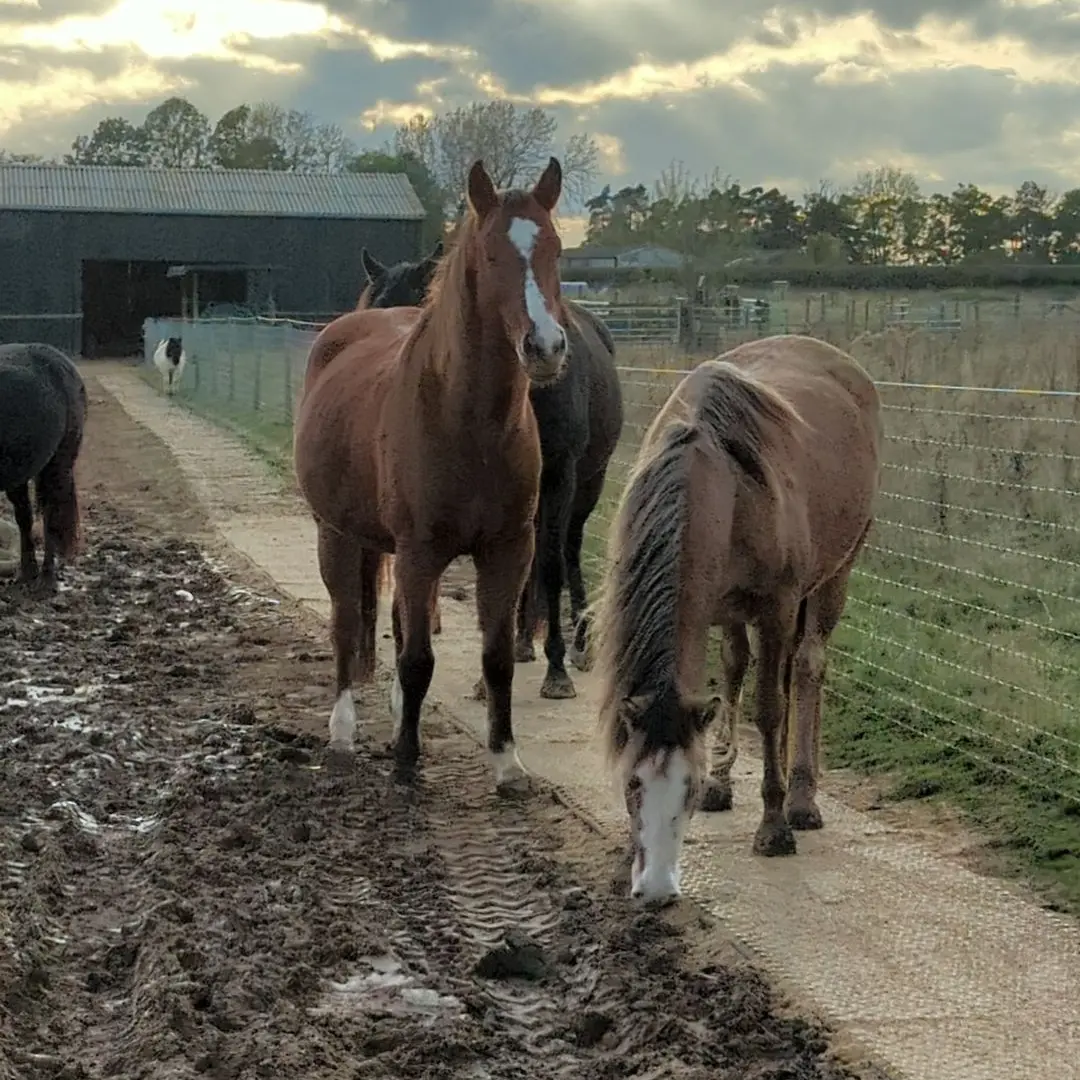
High-traffic areas benefit greatly from reinforced surfaces. Hardstanding created with the likes of HIT Step Mats or HIT Top Clean Mats helps to prevent poaching and keeps the ground safer and more stable underfoot. These surfaces are particularly useful in gateways, feeding areas, and near shelters.
Shelter and Rugging
Where possible, providing shelter from persistent rain and wind allows horses to escape the worst of the weather. Natural shelters such as hedgerows or trees is helpful, but manmade options offer reliable cover during heavier weather. Rugging appropriately for the conditions also keeps horses comfortable and reduces the risk of chills from standing in wet, muddy fields.
Daily Management Tips for Horses
Even with the best infrastructure, daily care plays a vital role in keeping horses comfortable. Regular hoof picking prevents problems from escalating, while careful washing and drying of legs helps to avoid mud fever. Many owners find that applying a barrier cream or spray before turnout gives an added layer of protection against the wet.
Final Thoughts
Mud is an unavoidable part of winter horse care, but it does not have to mean constant battles with health problems. By recognising the hidden dangers of mud and putting effective management strategies in place, owners can protect their horses’ comfort and well-being all season long. With practical solutions such as mud mats, the worst of the mud can be managed, making winter a far easier and healthier experience for both horses and their owners.